
White-Label VoIP: How Resellers and MSPs Can Launch a Branded Voice Service Without Building Infrastructure
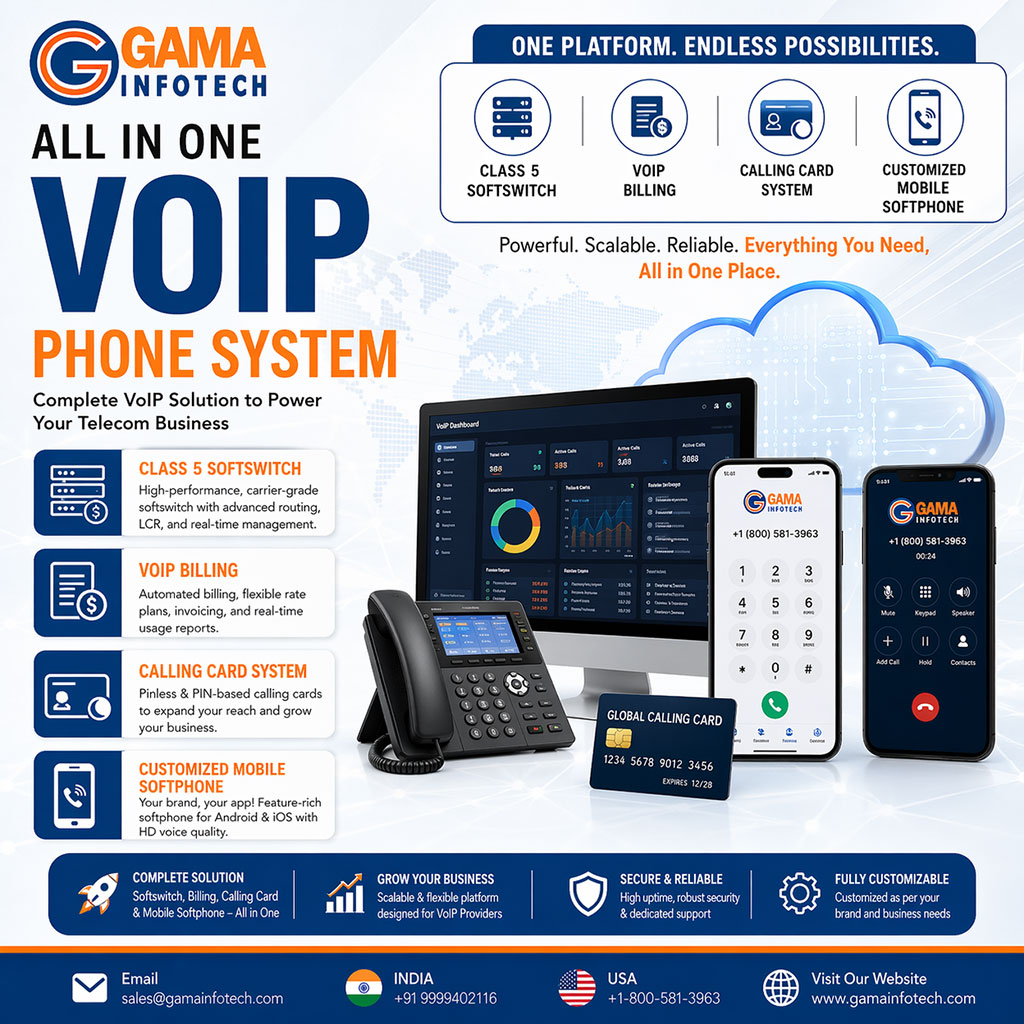
For MSPs and telecom resellers, white-label VoIP offers a concrete path to recurring revenue without the capital cost, staffing, and timeline of building your own platform. You get a fully branded service — your logo, your pricing, your customer relationships — while an upstream provider maintains the infrastructure that keeps calls running. Here’s what the model actually involves and how to evaluate whether it’s right for your business. What Is White-Label VoIP? White-label VoIP is a hosted voice platform that a provider builds and maintains, but that you rebrand and resell under your own company name. To your customers, it looks and feels like your phone system — your domain, your invoices, your support line — not a third-party service. At its core, the model separates infrastructure ownership from commercial ownership. The upstream provider runs the softswitch (the software that routes SIP calls between endpoints), manages carrier interconnects, and handles uptime. You control the brand, set the pricing, bill the customer, and own the relationship. This is fundamentally different from an agent or referral arrangement. Agent and referral programs offer the lowest barrier to entry — you refer customers to a provider and receive a commission — but you have no control over pricing, the customer relationship ultimately belongs to the provider, and your commission is fixed regardless of the value you deliver. In a white-label model, you are not just referring business to a carrier. You become the brand, the biller, and the primary point of contact for your customers. Your backend partner handles the technical infrastructure, switching, uptime, compliance, and platform maintenance, while you own the commercial relationship and long-term revenue. The market context matters here. The global VoIP services market is currently estimated at $158.72 billion in 2024, with projections to reach as much as $361.53 billion by 2031, at a compound annual growth rate (CAGR) of 12.5%. That sustained growth creates durable demand — and white-label reselling is one of the most capital-efficient ways to capture a share of it. How White-Label VoIP Works: Infrastructure, Branding, and Revenue The mechanics are straightforward: you purchase voice service at wholesale rates and resell it at your own retail price, keeping the margin. The provider’s infrastructure runs invisibly underneath your brand. The Infrastructure Layer Every white-label VoIP deployment rests on a softswitch — the software engine responsible for establishing, routing, and terminating SIP sessions across the network. A softswitch is a component of a software-defined network (SDN) that helps connect different technologies, ensure call quality, and gather necessary metrics by establishing, maintaining, routing, and terminating sessions in VoIP networks. There are two classes relevant to resellers. Class 4 softswitches are designed for long-distance call routing between exchanges, primarily in a carrier-to-carrier environment, handling large volumes of voice traffic. Class 5 softswitches focus on local call routing and handle direct connections between individual users — landlines, mobile devices, or VoIP systems — managing features such as voicemail, call forwarding, and caller ID. Most white-label reseller programs are built on Class 5 infrastructure because it handles the feature-rich, end-user PBX capabilities that business customers expect. The provider also maintains Session Border Controllers (SBCs) that enforce security at the network edge, manage codec negotiation (G.711, G.729, Opus), and provide NAT traversal for remote endpoints. RTP (Real-time Transport Protocol) carries the actual voice media between parties, while SIP handles signaling. You don’t manage any of this — the provider does. The Branding Layer Most white-label VoIP programs include a cloud voice platform (PBX, users, call routing, apps), number services (new numbers, porting, toll-free, E911), administration tools (user management, roles, reporting), a defined support model, and a branding layer covering logos, portals, invoices, and emails. The depth of that branding layer is where programs diverge significantly. A genuine white-label arrangement ensures your upstream provider is invisible at every touchpoint — portal domains, caller ID display, email notifications, mobile app store listings, and invoice headers should all carry your identity. White-label softphone apps (iOS and Android dialers distributed under your brand) are a key part of this experience. At Gama Infotech, we develop custom-branded mobile dialers and softphone applications that resellers can deploy under their own name, giving end users a seamless branded calling experience across devices. The Revenue Model You purchase SIP trunking and voice services at wholesale rates from your platform partner, then resell those services to your customers at prices you determine, keeping the margin as profit. SIP trunking operates on a subscription model — customers pay monthly fees for their channels and usage. Once you acquire a customer, that revenue continues month after month for as long as they remain satisfied with your service. White-Label vs. Building Your Own VoIP Platform Building proprietary telecom infrastructure gives you maximum control — but it demands engineering depth, capital, and years of development time that most MSPs and telecom entrepreneurs cannot justify. Here’s how the two approaches compare across the dimensions that matter most to resellers: Factor White-Label VoIP (Reseller) Build Your Own Platform Time to market Days to weeks (platform is ready; you configure branding) 12–36+ months (softswitch dev, SBC setup, carrier interconnects, app development) Upfront capital Low to none — no infrastructure investment required High — servers, licenses, development salaries, NOC staffing Engineering team required Not required; provider handles SIP, RTP, SBC, and platform maintenance Required — SIP engineers, backend devs, QA, DevOps, security team Ongoing maintenance Provider manages updates, patches, uptime, and carrier relationships Full responsibility — OS updates, security patches, SIP interoperability testing Branding control Good — portals, invoices, softphone apps, domains carry your brand Complete — every layer is under your control Feature roadmap Dependent on provider release cycle; may lag behind your custom needs Full control; build exactly what your market requires Gross margin potential 50–70%+ on voice services (wholesale-to-retail spread) Very high long-term, but offset by substantial OpEx (staff, infra, compliance) Scalability Scales with provider infrastructure; no hardware procurement required Scales with your investment in capacity planning and data center redundancy Compliance burden Provider handles E911,