
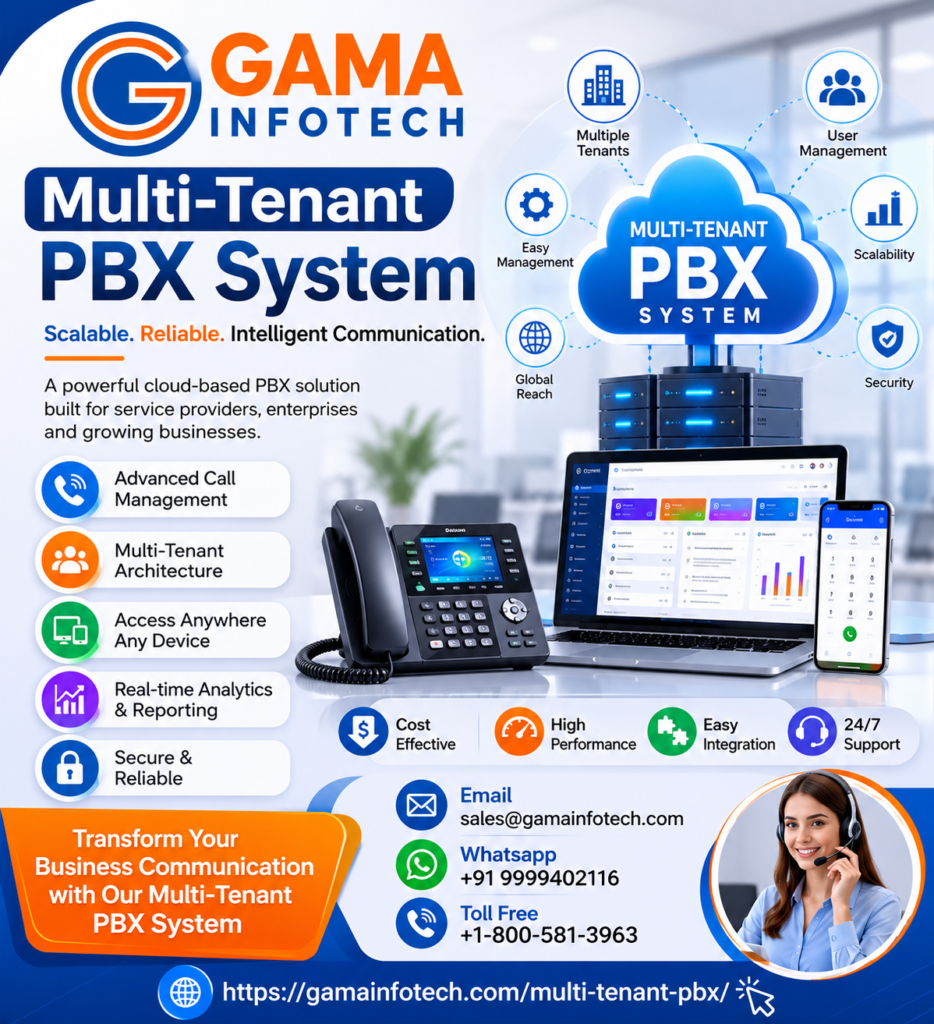
A Multi-Tenant PBX System is a cloud-hosted private branch exchange that allows multiple independent customers (tenants) to share the same PBX infrastructure securely. This system is ideal for resellers and service providers who want to offer telephony services to numerous clients without needing separate hardware for each.
Core Key Features:
- Multi-Tenancy: Supports multiple clients on a single platform with complete isolation of data and services.
- Cloud-Based: Hosted in the cloud, reducing the need for physical hardware and enabling easy scalability.
- Custom Branding: Allows resellers to brand the PBX services as their own.
- Centralized Management: Simplifies administration through a unified interface for managing all tenants.
- Feature-Rich: Includes call routing, voicemail, conferencing, auto-attendant, call analytics, and more.
- Cost-Effective: Lowers operational costs by sharing resources across multiple tenants.
Benefits for Resellers & Service Providers:
- Scalability: Quickly add new customers without significant infrastructure investment.
- Flexibility: Offer customized telephony solutions tailored to each tenant’s needs.
- Recurring Revenue: Generate steady income through subscription-based services.
- Reduced Maintenance: Cloud hosting means less onsite maintenance and easier updates.
- Enhanced Security: Tenant data is isolated, ensuring privacy and compliance.

1. Understanding Multi-Tenant Cloud PBX
A Multi-Tenant Cloud PBX is a centralized telephony platform hosted in the cloud that serves multiple customers (tenants) independently on the same infrastructure. Each tenant has its own isolated environment, ensuring privacy and customized features.
Why Multi-Tenancy?
- Resource Sharing: Saves costs by sharing servers and software.
- Isolation: Each tenant’s data and configurations remain private and separate.
- Scalability: Easily add or remove tenants without disrupting others.
2. Core Components
- Softswitch: Central call management and routing engine.
- Media Gateway: Connects VoIP calls with traditional telephony networks.
- Billing System: Tracks usage and generates invoices.
- Tenant Management Portal: Interface for resellers/service providers to manage customers.
- End-User Portal: Allows tenants to manage their users, extensions, and features.
- Security Layer: Firewalls, encryption, and access controls to safeguard data.
3. Key Features to Offer
- Auto-Attendant & IVR: Automated answering and call routing.
- Call Forwarding & Transfer: Flexible call handling options.
- Voicemail & Unified Messaging: Integrated voice and message management.
- Conferencing & Collaboration: Audio and video conferencing capabilities.
- Call Recording & Analytics: Monitoring and reporting tools.
- Mobile & Softphone Support: Access via smartphones and desktop apps.
- Customizable Dial Plans: Tailored call routing for different tenants.
4. Technical Setup Overview
- Cloud Hosting: Choose a reliable cloud provider (AWS, Google Cloud, Azure) or telecom-specific platforms.
- Softswitch Software: Deploy carrier-grade VoIP softswitch software that supports multi-tenancy.
- SIP Trunks: Connect your system to PSTN or other VoIP providers.
- Tenant Isolation: Use virtualization or containerization to separate tenant environments.
- APIs: Enable integration with CRM, billing, or other platforms.
- Redundancy & Backup: Ensure high availability and data protection.
5. Business Model for Resellers & Providers
- Subscription Plans: Charge tenants monthly/annual fees based on users or features.
- White Labeling: Brand the service under your company name.
- Value-Added Services: Offer premium features like advanced analytics, integration, or support.
- Support & Maintenance: Provide customer service and technical support as a package or add-on.
6. Advantages for Resellers & Providers
- Reduced Capital Expenditure: No need to buy expensive hardware.
- Faster Deployment: Cloud infrastructure allows rapid onboarding.
- Increased Market Reach: Serve multiple clients with varying needs.
- Recurring Revenue Stream: Predictable income through subscriptions.
- Competitive Edge: Offer modern, feature-rich telecom solutions.
7. Challenges & Considerations
- Security: Ensure strong encryption and compliance with regulations.
- Quality of Service (QoS): Maintain call quality through bandwidth management.
- Scalability: Plan infrastructure growth to match customer demand.
- Customer Support: Prepare for varying levels of tenant IT expertise.
- Integration Complexity: Manage seamless interoperability with existing systems.
8. Getting Started Checklist
- Select a robust multi-tenant PBX platform or software.
- Choose a cloud hosting provider with telecom-grade SLAs.
- Set up SIP trunk agreements with carriers.
- Design tenant management and billing workflows.
- Develop marketing and sales strategies for your target clients.
- Implement security protocols and compliance measures.
- Train your support team for multi-tenant environment management.
By implementing a Multi-Tenant Cloud PBX System, resellers and service providers can efficiently scale their business, offer rich communication features, and build long-term customer relationships in the competitive telecom market.