
Telecom Operators

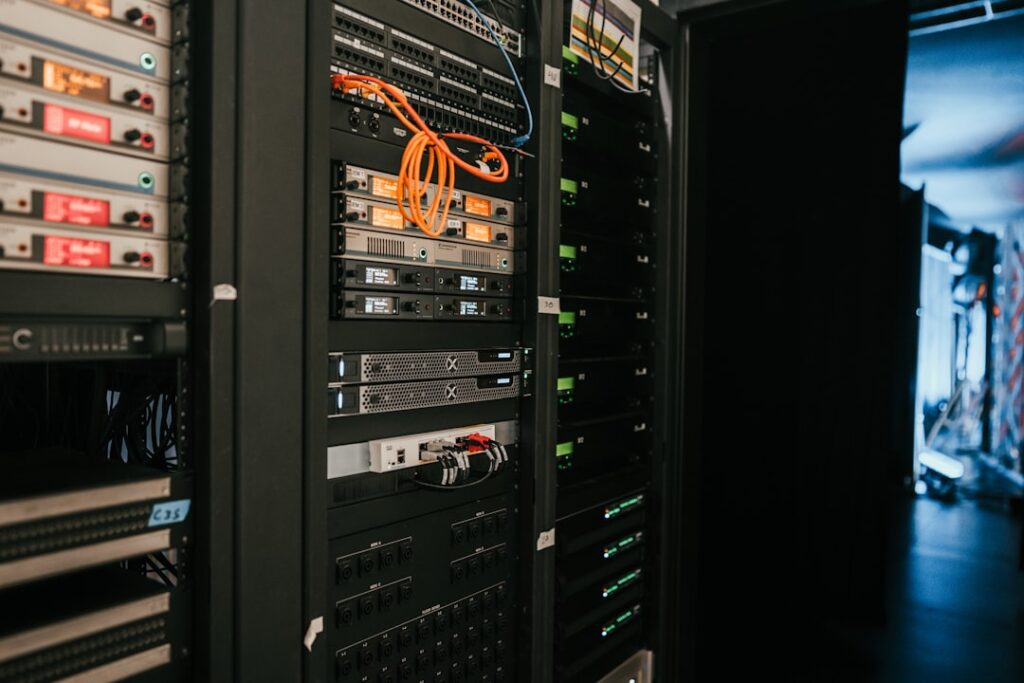
Server rack infrastructure in data center representing cloud telephony and Class 5 softswitch deployment environment. Photo by Taylor Vick on Unsplash

Class 5 Softswitch for Cloud Telephony: Architecture, Features, and Deployment Roadmap for ITSPs

If you’re building or operating a cloud telephony business — whether as an ITSP, a hosted VoIP provider, or an MSP adding voice to your portfolio — the Class 5 softswitch is the platform your entire subscriber experience rides on. It’s not a background component. It governs whether your customers can reach voicemail, trigger IVR menus, forward calls to their mobile, or join a conference bridge. The architecture you choose, and the features it supports, determine both your service quality and your revenue ceiling. This guide covers the full picture: what a Class 5 softswitch actually does under the hood, the subscriber features that drive retention, the multi-tenancy and billing integrations that make a service provider business operationally viable, and the build roadmap if you’re considering a custom platform. It’s written for operators who need to make real decisions, not for people who just want a definition. Understanding Class 5 Softswitch: The Subscriber-Facing Core of Cloud Telephony A Class 5 softswitch is the layer of your VoIP network that deals directly with end users — authenticating subscribers, managing their registrations, routing their calls, and delivering the feature set they pay for. If Class 4 is your carrier highway (handling bulk, long-distance transit between networks), Class 5 is the on-ramp and off-ramp that connects individual subscribers to that highway. Class 5 softswitches manage local call delivery and advanced features for end users. In practice, this means the platform handles SIP registration from a subscriber’s IP phone, softphone, or mobile client; authenticates credentials; determines routing; applies features like call forwarding or voicemail; and generates Call Detail Records (CDRs) for billing. None of that happens at the Class 4 layer, which is purely concerned with carrier-to-carrier transit. Historically, these functions lived in hardware central office switches. A Class 5 switch served as a telephone routing exchange connecting the calling client to the called client through an IP network and the Public Switched Telephone Network (PSTN). The modern software-based equivalent does all of this on commodity Linux servers in a cloud environment — without proprietary hardware, without per-port licensing tied to physical capacity, and without the capital expenditure of legacy infrastructure. The practical result for cloud telephony providers: a Class 5 switch can handle registration, call setup, routing, and teardown while ensuring compatibility with softphones, mobile phones, SIP trunks, and IP phones. That compatibility across endpoint types is fundamental — your subscribers might be on a desk phone, a mobile SIP client, or a browser-based WebRTC softphone, and the switch needs to handle all of them transparently. Who Deploys a Class 5 Softswitch? The use cases span a wide range of operators. ISPs offering bundled VoIP services to residential and small business customers require Class 5 softswitches for local call management and value-added features. UCaaS providers building integrated voice, video, and messaging platforms use them as the call control core. ITSPs launching calling card, callback, or hosted PBX products all depend on Class 5 infrastructure. The common thread: any service that involves subscriber accounts, per-user features, and retail billing needs a Class 5 platform. Key Features of a Cloud-Ready Class 5 Softswitch A cloud-ready Class 5 softswitch must do more than route calls. The feature set determines your competitive positioning — whether you can serve residential, SMB, and enterprise segments from a single platform, and whether subscribers stay or churn when a competitor offers more functionality. Core features should include call forwarding, call waiting, voicemail, DND, IVR, conferencing, and number portability support. Beyond these baseline capabilities, the platform should support DID management, call recording, time-based routing, hunt groups, and auto-attendants. Advanced features such as call analytics, real-time monitoring, customizable dial plans, and white-label portals can help differentiate your offerings. Here’s how to think about each feature category from an operator’s perspective: Subscriber Authentication and Security Class 5 softswitches offer strong call authentication mechanisms to verify user identities before call initiation, preventing fraudulent usage and protecting VoIP accounts from unauthorized access. This matters operationally because toll fraud on a poorly secured VoIP platform can generate thousands of dollars in unexpected carrier charges overnight. Essential security capabilities include SIP authentication, IP whitelisting, rate limiting, and anomaly detection. Hosted PBX and IP Centrex For business users, Class 5 switching offers hosted PBX and IP Centrex services without the need for on-site hardware. It supports hunt groups, auto attendants, and role-based call control. This is the feature tier that lets you compete in the SMB market without asking customers to buy and manage on-premise equipment. The switch provisions these features per tenant, allowing an MSP to offer fully managed hosted PBX to hundreds of business accounts from a single platform. Call Center Features Call center support includes ACD (automatic call distribution), IVR integration, live call monitoring, and agent performance reporting. For ITSPs targeting contact center customers or adding contact-center-as-a-service to their portfolio, this feature set is a meaningful revenue differentiator. It elevates the platform from a simple voice pipe to a business productivity tool. Calling Card and Prepaid Services Class 5 softswitches support calling card platforms with PIN validation, intelligent routing, call holding during transfers, and call forwarding to alternate numbers. For ITSPs targeting diaspora communities or international calling markets, calling card services remain a viable and high-margin business model — and they require the Class 5 layer to handle authentication, balance deduction, and call routing in real time. Architecture Overview: Signaling, Media Handling, and Database Layers A Class 5 softswitch is not a monolithic application. Understanding the component architecture matters when you’re evaluating scalability, redundancy options, and integration points — because the design of these layers determines where bottlenecks form and how you address them. A softswitch comprises two core components: a media gateway or access gateway for processing media streams, and a call agent or call feature server for handling call control, routing, and signalling. In modern cloud deployments, these functions are further decomposed: Signaling Layer The signaling layer handles SIP message processing — REGISTER, INVITE, BYE, and the full session lifecycle. Tools like Kamailio

Class 5 Softswitch for Cloud Telephony: Architecture, Features, and Deployment Roadmap for ITSPs Read More »

what is voip

VoIP Softswitch Development and Implementation: A Technical Guide for CTOs and Telecom Architects

If you’re building or scaling a VoIP business, the softswitch isn’t just another component in your stack — it’s the decision engine that determines whether your infrastructure can support growth, deliver quality, and remain profitable over time. This guide is written for the technical and business leaders who make those architecture decisions: CTOs at ITSPs, telecom startup founders evaluating their first platform, and wholesale VoIP architects looking at a re-architecture. We’ll cover the full lifecycle: softswitch definition and architecture, class selection, protocol requirements, scalability design, build-vs-buy trade-offs, OSS/BSS integration, security and compliance, vendor evaluation, and realistic cost modeling. No filler, no vendor cheerleading — just the information you need to make defensible decisions. What Is a VoIP Softswitch? Definition, Architecture & Role in Modern Telecom A VoIP softswitch is a software-based platform that performs call routing, signaling control, and session management over IP networks — replacing the role once filled by dedicated TDM hardware switches. It sits at the heart of every carrier-grade VoIP deployment, making real-time decisions about where each call goes, which codec to use, and how to bill for it. According to AWS’s Real-Time Communication reference architecture, a softswitch provides the intelligence for establishing, maintaining, and routing voice calls within or outside the enterprise. Every subscriber must register with the softswitch to send or receive calls, and it continuously tracks subscriber state and reachability using supporting network components. Architecturally, a modern softswitch separates two planes of operation: The Signaling Plane handles call setup, modification, and teardown. It processes SIP (Session Initiation Protocol) messages, manages registration, enforces dial plans, applies routing logic, and interfaces with the billing system to track Call Detail Records (CDRs). This is where your business logic lives: Least Cost Routing (LCR), number translation (ENUM lookups), fraud rules, and quality-based routing all operate here. The Media Plane handles the actual voice packets. RTP (Real-time Transport Protocol) streams carry audio between endpoints, while the softswitch or an associated media gateway manages transcoding between codecs, handles NAT traversal, and enforces encryption via SRTP. In high-performance deployments, the media plane is deliberately separated from the signaling plane — running on dedicated media servers or RTP proxies — to prevent signaling bottlenecks from degrading audio quality. Between these two planes, a well-architected softswitch also incorporates a Session Border Controller (SBC) at the network edge. The SBC sits at the edge of the voice network, tracking all incoming and outgoing traffic across both control and data planes, absorbing malicious traffic before it can reach core softswitch infrastructure. Most modern SIP trunks are established through SBCs rather than direct connections to the core softswitch. Understanding this two-plane architecture matters before you make any procurement or build decision. A platform that conflates signaling and media processing on a single node will hit scalability limits much earlier than one that separates them — and retrofitting that separation later is painful. Class 4 vs Class 5 Softswitch: Which Does Your Business Need? The single most important architectural decision for any ITSP or carrier is whether you need a Class 4 softswitch, a Class 5 softswitch, or both. These aren’t just marketing labels — they represent fundamentally different traffic models, feature sets, and infrastructure requirements. Class 4 softswitches handle long-distance calls and wholesale traffic, focusing on routing calls across large networks, while Class 5 softswitches manage local call delivery and advanced features for end users. A call originating in one country is typically routed by a Class 4 softswitch to another country, where a Class 5 softswitch takes over to deliver the call to the recipient. Dimension Class 4 Softswitch Class 5 Softswitch Primary Function Wholesale transit routing between carriers and across long distances Retail voice delivery to end users (residential and business) Traffic Model High-volume, carrier-to-carrier, international long distance Local and national calls, PBX-style service delivery Key Features LCR, protocol transcoding, CDR generation, inter-carrier billing, fraud detection IVR, voicemail, call forwarding, calling cards, conferencing, auto-attendant, DID management Protocol Support SIP, H.323, MGCP — inter-network protocol conversion is essential SIP primarily, with SIP-to-PSTN gateway capability Scalability Focus Concurrent calls (thousands to tens of thousands), CPS (calls per second) Subscriber count, feature richness per user, multi-tenancy Typical User Wholesale VoIP carrier, international transit provider, Tier 1/2 operator ITSP, hosted PBX provider, UCaaS platform, residential VoIP provider Billing Model Per-minute wholesale billing, inter-carrier settlements Per-user monthly subscriptions, prepaid calling cards, usage-based Infrastructure Cost Higher — carrier-grade hardware or bare metal for peak concurrency Moderate — cloud-deployable, scales with subscriber base When to Use You route minutes for other carriers, run international traffic, or operate a wholesale termination business You sell phone numbers and features directly to businesses or consumers The practical implication: Class 4 softswitches are built to handle thousands of concurrent calls with minimal latency — this scalability makes them ideal for wholesale VoIP providers and international carriers. Class 5 systems trade raw call volume capacity for feature depth, managing per-user state like voicemail boxes, call queues, and IVR menus. A third option worth considering is a hybrid softswitch, which combines Class 4 transit capabilities with Class 5 subscriber management. This is the architecture most ITSPs eventually converge on as they grow: you need the retail features to win enterprise customers, but you also need efficient wholesale routing to control termination costs. The trade-off is complexity — hybrid platforms require more careful capacity planning and have more integration surface area to maintain. If you’re a startup with limited capital, start with Class 5 and purchase wholesale transit from an upstream carrier. Trying to operate Class 4 infrastructure at low traffic volumes is economically inefficient. If you’re a wholesale carrier or transit provider, Class 4 is your core platform and Class 5 features are unnecessary overhead. Core Components of a VoIP Softswitch System A production-grade VoIP softswitch is never a single process or binary — it’s a system of coordinated components. Understanding what each component does helps you evaluate vendor platforms honestly and design custom architectures that don’t have hidden single points of failure. SIP Proxy

VoIP Softswitch Development and Implementation: A Technical Guide for CTOs and Telecom Architects Read More »

Person holding iPhone displaying calling interface for mobile VoIP softphone app

How to Launch a Branded Mobile Softphone Without Building From Scratch

A white label mobile softphone lets VoIP providers, telecom operators, and startups launch branded calling apps faster without investing in a full in-house build. Gama Infotech’s Mobile Softphone is positioned for businesses that want SIP-based internet calling, cross-platform support, and room to scale under their own brand. The biggest advantage is speed to market. Instead of managing every stage of app architecture, interface design, and feature development internally, businesses can start with a ready foundation and focus on customer acquisition, service quality, and growth. What a White Label Mobile Softphone Actually Solves A mobile softphone solves the core challenge of delivering reliable voice communication through smartphones using internet connectivity and SIP protocol. For service providers, that means offering a modern calling experience on Android and iOS while keeping their own branding front and center. Rather than directing customers to a generic app, businesses can introduce a calling platform that reflects their name, logo, and service identity. This helps strengthen trust, improve brand visibility, and create a more consistent customer experience across markets. Built for VoIP Providers, Telecom Operators, and Startups This type of solution is especially valuable for companies that need to enter the market quickly with a professional app experience. VoIP service providers can extend their offerings, telecom operators can support mobile-first users, and startups can reduce development time while launching with a polished product. If you’re experiencing these symptoms, our team at Gama Infotech can help. Core Features That Make the Platform Practical The most valuable softphone features are the ones that support stable day-to-day communication while keeping the app easy to use. Gama Infotech highlights SIP-based voice calling, support for Android and iOS, branding flexibility, and advanced VoIP functionality designed for telecom-focused businesses. These capabilities matter because users expect simple onboarding, dependable call quality, and a familiar mobile experience. Providers, meanwhile, need a solution they can present as their own while supporting long-term business expansion. Capability Business Benefit White label branding Launch under your own business identity SIP protocol support Enable internet-based voice communication Android and iOS compatibility Reach users across major mobile platforms Advanced VoIP features Deliver a stronger communication experience Customization options Adapt the app to your market and service goals Why Branding and Customization Matter Branding is not just a visual upgrade. It helps transform a telecom app into a business asset that reinforces recognition, credibility, and customer loyalty. A white label approach gives providers more control over how their service is presented to end users. Customization also supports different go-to-market strategies. Some businesses may want a clean consumer calling app, while others may need a more service-provider-focused experience. Starting with a customizable foundation makes it easier to align the product with your audience. How This Supports Global Telecom Growth A mobile softphone supports global growth by giving telecom businesses a flexible way to deliver internet-based voice services beyond a single local market. With smartphone adoption and remote communication needs continuing to shape customer expectations, mobile access is now central to service expansion. For growing providers, the opportunity is not only to launch an app, but to create a branded channel that can support customer retention, market entry, and service differentiation. A scalable mobile solution can become an important part of a broader telecom business strategy. Who Should Consider a White Label Softphone This solution is a strong fit for businesses that want to offer internet calling without taking on the full burden of building a mobile app from the ground up. It is especially relevant for organizations focused on faster deployment, brand ownership, and a mobile-first communications model. If your business wants to launch a SIP-based calling app for customers on Android and iOS, a white label model can reduce complexity while preserving flexibility. That combination is often what makes expansion more practical for emerging and established providers alike. Choosing the Right Launch Partner The right mobile softphone partner should offer reliable technology, branding flexibility, and a clear understanding of telecom business needs. A solution that balances usability, feature depth, and customization can help reduce delays and support a smoother rollout. Gama Infotech offers a Mobile Softphone built for businesses that want to launch branded VoIP calling services with confidence. Contact Gama Infotech today to schedule a consultation.

How to Launch a Branded Mobile Softphone Without Building From Scratch Read More »